
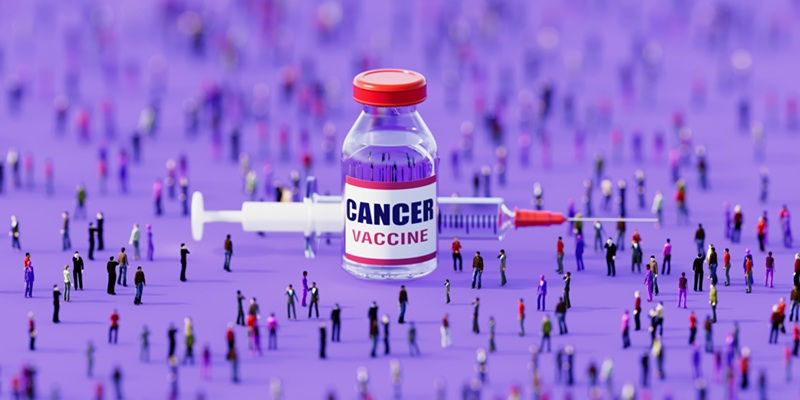
The future of medicine just arrived

Moderna (MRNA) just gave us a glimpse of the future.
The stock skyrocketed 177% (!) on Wednesday, as I (Chris Reilly) am sure you’ve seen...

It was the biggest one-day gain for any S&P 500 stock in 25 years.
The reason was a major breakthrough in cancer treatment.
But here's what caught my attention: This isn't some futuristic technology we'll have to wait decades to see benefits from. It's happening now.
Moderna and Merck & Co. (MRK) announced positive Phase 3 results for an experimental, personalized mRNA cancer vaccine that, when combined with Merck's Keytruda drug, helped keep melanoma from returning or spreading in a trial of 1,137 patients.
But the headline doesn't really capture what's so promising about this.
I asked our Chief Analyst Stephen McBride to break it down further.
He said this goes well beyond Moderna.
The trial, called INTerpath-001, enrolled people whose melanoma had been surgically removed but was likely to come back.
Two-thirds received Keytruda, plus Moderna's intismeran autogene. The other third received Keytruda alone.
Here's the part Stephen found most remarkable: 758 people were treated and not one of them received the same drug as anyone else.
758 different medicines. Each one manufactured for a single human being. Each one designed around the specific typos in that one person's specific tumor. And it worked!
We're finally moving away from one-size-fits-all medicine.
We’re entering the age of personalized medicine, as Stephen told me.
And it's worth remembering that the full Phase 3 data hasn’t been released yet. Moderna and Merck said the trial met its key endpoints, but investors will get more details when the companies present the results.
Still, the market clearly thinks something historic happened. Stephen agrees:
Nixon declared war on cancer in 1971. For most of the 50 years since, the honest verdict was that we were losing slowly.
Now, we’re winning. The US cancer death rate is roughly 29% lower than it was in 1999.
Long humanity!
Now, moving onto crypto...
I’m sure you’ve seen the bullish price action in bitcoin (BTC) over these last few days. The world’s largest crypto is approaching $80,000, up more than 20% over the past month.
I asked Stephen for his take, and he thinks the bottom in crypto is in.
More from Stephen:
I’m still very disappointed in crypto from an innovation point of view. Where are all the applications with millions of users?
But from a pure price/charts perspective, I think the bottom is in.
Why? Because both majors climbed back above the line that matters.
Bitcoin fell 54% from its high. Ethereum (ETH) fell 70%. Both have now recovered back above their 200-day moving averages—the average price over the last 200 trading days, and the line most professionals use to separate an uptrend from a downtrend.
Every previous time bitcoin has crossed back above that line after a fall like this one, it’s marked the end of the cycle.
So now may be a great time to start looking at cryptos now that momentum is back. But Stephen says to be aware that the garbage isn’t coming back.
In previous cycles, you could make money from junk. Stephen doesn’t think that’s the case anymore.
Instead, you want to focus on crypto businesses generating real revenue. Tokens that earn genuine revenue and actually return it to holders have hugely outperformed the ones that don't.
And one stands out...
Hyperliquid (HYPE) is doing something most crypto projects haven't.
Stephen calls Hyperliquid "the best-run business in crypto."
It's an exchange where users can trade everything from bitcoin to Nvidia (NVDA), oil, and other assets.
Hyperliquid generated $169 million in revenue last quarter and has returned more than $1 billion to token holders. Roughly 97% of every dollar of trading fees goes toward buying the HYPE token back on the open market.
That's basically the crypto version of a stock buyback.
And Stephen says that's one of the most important things he's looked for since launching his RiskHedge Venture crypto advisory: value accrual.
In traditional markets, shareholders benefit when a business makes more money through dividends, buybacks, or simply owning an increasingly valuable piece of the company.
Crypto doesn't always work that way. A token can be associated with a growing protocol while token holders capture very little of the value.
Hyperliquid is different. It’s up 84% over the past year while bitcoin is down 31%.
Chris Reilly Executive Editor, RiskHedge
Share this article

Where Innovation Meets Investing