
The best self-driving stock is...
I’m just back from a two-week trip across America where I met 40 innovators building the future.
One experience that stuck with me was a Tesla (TSLA) ride from “startup community” Proto-Town back to Austin.
Proto-Town is roughly an hour’s drive from Austin. What stood out about this journey is my friend, who was sitting in the driver’s seat, didn’t touch the steering wheel once.
Instead, the Tesla drove for 50 miles through highway traffic, merges, construction, and city streets all by itself.
A few minutes into the trip, my friend even pulled up the USA-Belgium soccer match and started watching it on his phone!
I do not recommend watching soccer from the driver’s seat.
But the experience completely changed how I think about the self-driving race. And which stock to own.
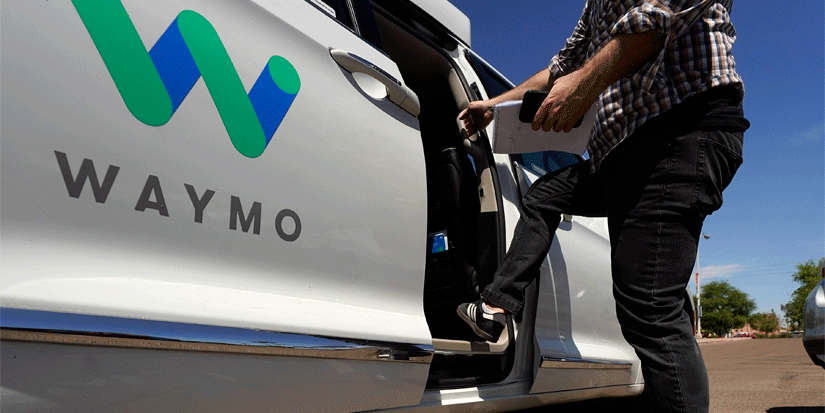
I love Waymo.
I have ridden in plenty of them. They feel futuristic, calm, and impressively safe.
Waymo is providing more than 500,000 fully autonomous rides per week. Its vehicles have logged more than 220 million miles without a human driver. Its safety record is unmatched.
If the competition is simply, “Who operates the best robotaxi service today?” Waymo wins hands down.
But I realized that’s the wrong way to look at it. The competition is not Waymo robotaxis versus Tesla robotaxis.
It is a self-driving taxi you occasionally hail versus a self-driving car you own.
In that race, there’s one clear winner.
Americans travel more than 3 trillion vehicle miles each year. Taxis and ride-hailing account for only 1% to 2% of that total. Most driving happens in privately owned vehicles.
The school run. The commute. Grocery shopping. Visiting family. The weekend road trip.
Waymo can capture the taxi and ride-hailing market. Tesla is targeting everything else.
You can buy a Tesla today and use FSD (full self-driving) on the roads you already travel. It’s impossible to buy a Waymo. And unless you live inside one of its approved service areas, you may not be able to use one at all.
$75,000.
That’s how much Waymo pays to put each of its newest cars on the road. The original Waymos cost $150,000! And each city needs thousands of them.
Buying the car is just the beginning. Waymo then must pay for insurance, charging, cleaning, repairs, and parking. When Waymo decides to double the size of its fleet, it must acquire and operate twice as many expensive vehicles.
Tesla has none of those costs.
Its customers buy and maintain the cars themselves. On top of it all, Tesla charges them a monthly subscription to use the FSD software.
Waymo pays to deploy each car. Tesla gets paid to deploy each car.
When Waymo enters a new city…
It must test the roads. Establish an approved service area. Deploy vehicles. Build charging and maintenance infrastructure. Work with local regulators. The process produces a great service, but expansion happens one city at a time.
That’s why, almost two decades after starting, Waymos still can’t drive on most freeways.
Tesla scales at software speed.
Its cars are already driving on all kinds of roads throughout the country. It had no problem navigating the dusty backroads of Austin.
Tesla may eventually prove that FSD can operate safely without human supervision. If it does, the company could make it available nationwide at the flip of a switch through a simple software update.
Based on my experience, Tesla’s FSD is already an expert driver.
At the end of the day, self-driving is an artificial intelligence problem.
These systems improve by consuming enormous amounts of driving data.
They need to see normal situations millions of times and rare situations often enough to learn how to respond. Construction zones. Confusing intersections. Aggressive drivers. Cyclists. Unusual weather. Poorly marked roads. That’s all training data.
Tesla has a major advantage here.
Its customers have driven roughly 11.9 billion miles using supervised FSD. Waymo has logged “only” around 220 million fully driverless miles.
Those miles are not equal. A Tesla still has a human sitting behind the wheel, ready to intervene. A Waymo mile is completed without a driver. Waymo’s data therefore proves a higher level of autonomy.
But Tesla has collected more than 50X as many miles. And those miles come from a much broader range of environments—not inside selected, carefully tested service areas.
If anyone can create a perfect robot driver, it’s Tesla.
Nearly 40,000 Americans die on the roads every year.
Both Waymo and Tesla are attacking that number. They are going to save thousands of lives. It’s more helpful to think of driverless cars as “vaccines” against a deadly disease than just another piece of technology.
The optimist in me hopes both win big. My kids may never need a driver's license. And I couldn't be happier about it.
But at the end of the day, we’re investors. And Tesla has the better product… the larger market… and a business model that can scale much faster.
It’s the best self-driving stock to buy.
Congratulations to Disruption Investor members who are up 30% on Tesla since we added it to the portfolio. Our research suggests it can double over the coming years.
I chatted with many people in the “Elon universe” in Austin and they’re convinced Tesla and SpaceX (SPCX), now both public companies, will merge in the next 1–2 years.
Professional investors love to sound smart and come up with investing ideas nobody else thought of.
But if you care about making money, like I do, maybe the best idea is also the dumbest sounding: Long Elon Inc.
Stephen McBride
Chief Analyst, RiskHedge
Share this article
Where Innovation Meets Investing
Teslas are built on cameras alone. They fail in bad weather. They misread stip signs and speed limits. They have not been deployed at scale because Musk knows the accidents would multiply. We were supposed to be texting and driving last year. If you buy a Tesla, how do you expect to make money off it? Who pays the insurance? I would not pay. When is it supposed to charge? My car charges all night long because I use it all day. So many holes in your arguments…