
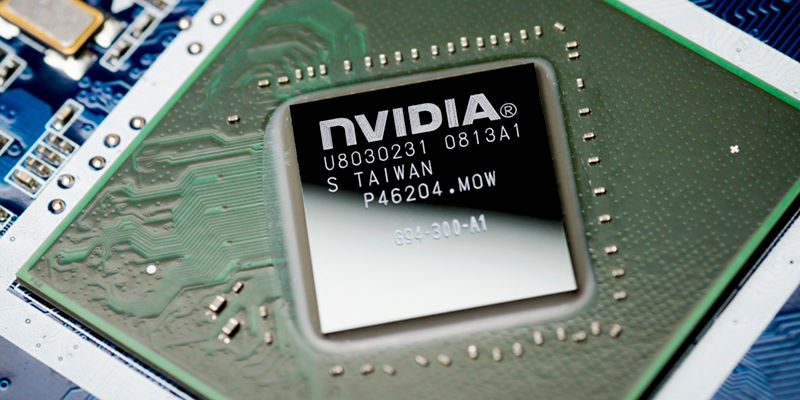
Is Cerebras the next Nvidia?

Stephen's note: Artificial intelligence (AI) chipmaker Cerebras Systems (CBRS) just IPO'd, and the questions are pouring in. Is this the next Nvidia (NVDA)? Should I buy it? What’s the play?
I've been inside their Silicon Valley data center. I've seen the chip up close. Here's my take, in a conversation with RiskHedge Executive Editor Chris Reilly...
***
Chris Reilly: Stephen, AI chip mania is in full swing. Nvidia just reported another monster quarter. And now we have a brand-new chip stock on the market in Cerebras, which you’re very familiar with. Some are calling Cerebras the next Nvidia. Is that a fair comparison?
Stephen McBride: I think framing it as the "next Nvidia” is the wrong way to think about it. But the short answer is no.
Chris: As longtime RiskHedge readers know, you recommended Nvidia back in September 2018, calling it the #1 stock you’d buy for the next five years. Readers who followed your guidance are sitting on gains of roughly 1,900% today. So when you say Cerebras isn't the next Nvidia, you know what the real thing looks like.
You've also been inside Cerebras' facility. Tell us what you saw during your trip with our publisher Dan Steinhart and your friend and bestselling author Matt Ridley.
Stephen: Yeah, we stood inside their Silicon Valley data center next to these massive 600-pound steel cages hooked directly into a power plant. Cooling systems pumping 100 liters of water per second just to keep the chips from melting. The servers were so loud, we had to shout to hear each other.
And the chip...
Cerebras makes the largest computer chips in the world. And they’re built for one thing: running AI models faster than anyone else. I snapped this photo of its dinner plate-sized chips:

That matters because one of the biggest bottlenecks for AI chips today is getting data in and out of memory quickly enough. Cerebras basically solved that problem. On their chip, OpenAI's coding model runs at 2,000 tokens per second. A Nvidia H100, which is a couple of generations back now, does about 100. So the speed difference is very real.
Chris: That sounds compelling. So what's the problem?
Stephen: The problem is memory capacity, not memory speed. Yes, they've got incredibly fast memory. But the chip only holds around 40 gigabytes of it. And if you look at the frontier AI models being run today... the stuff OpenAI, Google (GOOGL), and Anthropic are building... you need hundreds of gigabytes just to load the model. Cerebras cannot run today's frontier AI models.
Chris: Can they fix it?
Stephen: No... and this is the key point. The specific type of memory they use (SRAM) stopped getting faster. So the gap between what Cerebras can do and what Nvidia will do in two years will only grow.
They'd basically have to tear up the entire architecture and start over. It's like building one giant nuclear power plant that does everything, versus 20 smaller modular ones. They chose the giant plant. It works brilliantly for certain things. But it can't do everything, and changing course now is nearly impossible.
Chris: Didn’t OpenAI just loan Cerebras a billion dollars? Why would they do that if Cerebras has these issues?
Stephen: It's maybe the weirdest financial transaction I've ever seen. OpenAI didn't buy Cerebras chips outright... As you said, they loaned Cerebras a billion dollars, to be paid back in compute credits. Essentially, OpenAI prepaid for a billion dollars’ worth of AI processing.
I think this is just part of Sam Altman's strategy of doing deals with every chip company on Earth. He wants optionality. That's smart for OpenAI. But I wouldn't read it as a vote of confidence in Cerebras.
Chris: What's the right way to think about Cerebras then? What is it good at?
Stephen: It's a brilliant specialty chip for one specific use case: fast inference on small models. If you want fast tokens on a compact efficient model, Cerebras is excellent.
But Cerebras has been around for years. And today, 86% of its revenue comes from one customer: the UAE government's sovereign AI program. That's why it couldn't IPO in 2024 when it first tried.
A company this dependent on one government contract is a very different animal than Nvidia, which is essentially the picks-and-shovels provider for the entire AI industry.
Chris: So what's your verdict? Avoid it entirely?
Stephen: Cerebras is a trade, not an investment. The tech is real and the stock could rip in this chip shortage. It’s the kind of stock Justin Spittler’s members could profit from in his Super Alert trading service.
But I invest in businesses I want to own for years, and this isn't one of them. If you want to play the momentum, that's a different game.
Cerebras will capture maybe 1% of a massive market, and that might eventually make it a $100 billion company, but you're buying in at IPO prices—not at the 13-cent venture round that made venture capital firm Benchmark $5 billion. You're paying for hype.
There is one caveat. We're in a genuine chip shortage. When companies can't get enough Nvidia chips... and a lot of them can't... they start looking at second and third options. Cerebras benefits from that dynamic. So the stock will likely do fine. I'd just rather own Nvidia over that time.
Chris: Where should investors be looking instead?
Stephen: The unsexy, hidden infrastructure that makes AI possible. The picks-and-shovels businesses that win no matter which AI model comes out on top. That's where the real money is being made right now, and where we're focused in our research.
Chris: Thanks, Stephen. Sounds like Cerebras is a real technology, just not a great long-term investment at IPO prices.
Reader, while Stephen focuses on world-class businesses profiting from disruptive megatrends, and holding for years... Justin Spittler, our Chief Trader, operates completely differently. He doesn't need to love a company to make money from trading its stock.
Cerebras is a hyped-up IPO with volatile price action, which means it could be setting up for a good short-term trade opportunity.
Right now, Justin’s Super Alert premium trading service is on sale for a special discount, until Wednesday only. Go here if you’d like to get his buys in real time, the moment he makes them.
Chris Reilly Executive Editor, RiskHedge
Share this article

Where Innovation Meets Investing